The Philippines infrastructure watchdog and business confidence
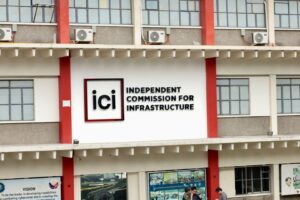
Philippines infrastructure watchdog operations were temporarily stalled after the commission lost quorum, raising governance and accountability concerns.
Public infrastructure plays a major role in economic growth. Roads, bridges, flood control systems, and public facilities support mobility, logistics, business expansion, and disaster readiness. Because of this, strong oversight in infrastructure spending is not only a governance issue. It is also a business and economic stability issue.
Recently, reports confirmed that the Philippines’ infrastructure watchdog body temporarily halted official operations after losing its quorum due to the resignation of two commissioners. Without enough members to formally function, the commission cannot continue its official activities until new appointments restore its required working structure.
What “Loss of Quorum” Means
A quorum refers to the minimum number of authorized members required for a commission or committee to make decisions and perform official actions. When that minimum is not met, operations often stop because actions, resolutions, and formal decisions may no longer be legally valid. The Philippines infrastructure watchdog is designed to strengthen transparency and accountability in public project spending.
In practice, this situation can delay ongoing reviews, slow investigations, and weaken momentum in enforcement activities. It does not necessarily mean the commission’s work becomes invalid, but it can pause the ability to act and move forward formally.
Why This Matters Beyond Politics
Many businesses focus on infrastructure because it directly affects operating costs and expansion decisions. Better infrastructure improves supply chain speed, reduces delays, strengthens delivery reliability, and increases regional competitiveness. However, these benefits depend on whether public funds are used effectively and projects are delivered properly.
When oversight agencies stall, it can affect confidence in three ways.
First, it affects the public’s trust that projects are being monitored and irregularities are being addressed in real time.
Second, it creates uncertainty around how quickly ongoing investigations and reform recommendations will continue.
Third, it raises concerns about whether accountability systems remain strong enough to prevent future misuse of infrastructure spending.
For business leaders and investors, accountability in public projects matters because governance stability influences long-term investment decisions. Companies are more likely to expand in environments where transparency is credible and public spending produces measurable results.
Progress Made Before the Pause
Before the operational stall, the infrastructure commission had already made notable progress in reviewing irregularities linked to public projects and related funding. It reportedly referred multiple cases to the appropriate government bodies for action and strengthened coordination with agencies responsible for investigation and enforcement.
This highlights a key reality: oversight work often becomes more impactful when it moves beyond reporting and begins producing actionable referrals, formal case filings, and recovery efforts.
The Bigger Issue: Oversight Must Be Continuous
Infrastructure corruption is not only a legal issue. It becomes an economic and social burden because public projects are directly linked to safety and productivity. Poorly implemented projects can lead to long-term consequences such as repeated flooding, road failures, or weakened public facilities. These failures create costs for businesses and households.
A major lesson for national development is that oversight cannot depend on temporary bodies alone. If watchdog functions are interrupted due to structural issues such as vacancies, the enforcement cycle weakens. This is why many governance experts push for institutionalized systems that can operate continuously, even when leadership changes occur. The Philippines infrastructure watchdog plays a key role in monitoring public infrastructure spending and ensuring transparency in project implementation.
Why Businesses Should Pay Attention
Businesses should pay attention to infrastructure oversight because infrastructure affects everything from logistics to consumer access. When oversight improves, project outcomes tend to be more reliable. That reliability strengthens the economy and creates better long-term conditions for business growth.
In addition, strong monitoring helps maintain investor confidence. Investors assess not only market size and consumer demand. They also assess whether public institutions enforce accountability and minimize systemic risks. When oversight bodies pause, even temporarily, it becomes important for the government to restore operational capacity quickly to maintain credibility.
What Happens Next
The most practical next step is restoring quorum through appointment or replacement processes so the commission can resume official operations and complete pending reviews, reporting, and recommendations.
If the government chooses to conclude the commission’s work once findings have been turned over to enforcement agencies, then continuity will depend on how well institutions such as the Department of Justice and the Office of the Ombudsman carry forward the investigations and reforms. For businesses, the Philippines infrastructure watchdog issue matters because governance stability affects investor confidence and long-term infrastructure reliability.
For the economy, the goal is clear: infrastructure accountability should lead to stronger safeguards, improved procurement standards, better contractor monitoring, and fewer leakages in public spending.
Read more on DTI Negosyo about business risk planning and operational resilience strategies for SMEs.
Disclaimer
Disclaimer: This article is published by DTI Negosyo for educational and informational purposes only. It is an original write-up based on publicly available news reports and does not reproduce any third-party article verbatim. This content is not legal, financial, or investment advice.
Leave a Reply