
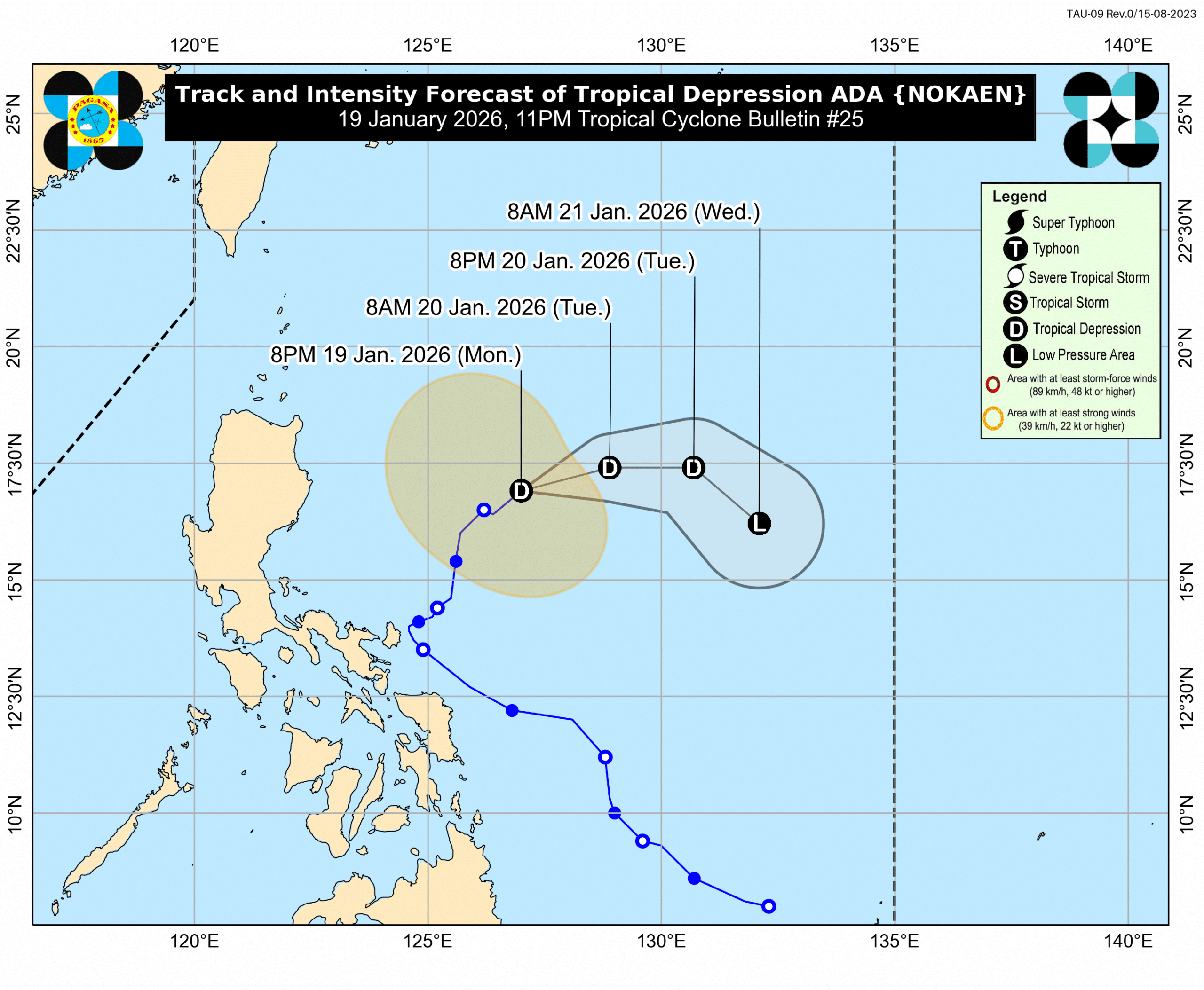
Tropical Depression Ada: Areas Under Strong to Gale-Force Winds
Tropical Depression Ada remains under close monitoring as it continues to influence weather conditions across parts of the Philippines, bringing periods of heavy rain and stronger winds that may pose risks to communities in vulnerable locations. Authorities are urging the public to stay alert, follow official advisories, and take early precautions as the system may continue to develop while moving near or over land. Authorities are urging the public to stay alert, follow official advisories, and take early precautions as the system may continue to develop while moving near or over land.
Weather disturbances such as tropical depressions often carry widespread rainbands capable of producing intense rainfall in a short period of time. When combined with saturated soil conditions or poor drainage systems, these weather events can quickly lead to flash floods, river swelling, and landslides. While the system may still be classified at a lower intensity compared to stronger storms, experts caution that rainfall impact can be severe even without typhoon-level winds, especially in areas historically prone to flooding.
Several provinces and surrounding regions have been placed under heightened awareness as the tropical depression affects weather patterns. Communities located near rivers, coastlines, and steep terrain are typically considered high-risk during prolonged rainfall events. Residents in low-lying areas may experience rapid flooding, while those in mountainous and elevated areas may face the danger of landslides or road collapses. Local authorities are advising residents to monitor conditions in their communities closely and to prioritize safety if evacuation or temporary relocation becomes necessary.
In coastal areas, strong winds and rougher seas may pose additional hazards. Fisherfolk and small sea vessels are often advised to avoid sailing when wave conditions become dangerous. Travel and transportation disruptions are also possible, particularly in provinces where ferry routes, road networks, and local bridges are vulnerable to heavy rains. Sudden flooding, road obstructions caused by fallen trees, and reduced visibility on highways may lead to delays and safety issues for motorists and commuters.
The progression of Tropical Depression “Ada” is considered dynamic, as tropical systems can change speed, direction, and intensity depending on surrounding atmospheric conditions. In some cases, a tropical depression may gradually strengthen as it moves over warm waters, while in others, interaction with landmasses may weaken it. This uncertainty makes it critical for the public to stay informed through verified official bulletins, particularly those issued by PAGASA and local disaster risk reduction offices.
At the same time, weather authorities noted that the strengthening surge of the northeast monsoon may bring strong to gale-force winds across multiple areas in the coming days, potentially worsening sea and land travel conditions.
Areas that may experience strong to gale-force gusts
January 19
-
Batanes
-
Babuyan Islands
-
Northern and eastern mainland Cagayan
-
Eastern Isabela
-
Ilocos Norte
-
Abra
-
Polillo Islands
-
Camarines Norte
-
Camarines Sur
-
Catanduanes
January 20
-
Batanes
-
Babuyan Islands
-
Northern and eastern mainland Cagayan
-
Eastern Isabela
-
Ilocos Norte
-
Ilocos Sur
-
Abra
-
Aurora
-
CALABARZON
-
Oriental Mindoro
-
Occidental Mindoro
-
Romblon
-
Marinduque
-
Bicol Region
-
Northern Samar
-
Samar
-
Eastern Samar
-
Dinagat Islands
Wednesday, January 21
-
Ilocos Region
-
Abra
-
Apayao
-
Cagayan Valley
-
Aurora
-
Bulacan
-
Bataan
-
Metro Manila
-
CALABARZON
-
MIMAROPA
-
Bicol Region
-
Visayas
-
Caraga
-
Davao Region
-
Camiguin
-
Misamis Oriental
-
Lanao del Norte
-
Zamboanga Peninsula
-
Basilan
-
Tawi-Tawi
Local government units and disaster response teams have been encouraged to maintain readiness, especially for communities where flooding and landslides are frequent. Preparedness measures often include clearing drainage systems, identifying evacuation centers, monitoring river levels, and ensuring that emergency response teams can operate quickly if conditions worsen. Coordination between local authorities and community leaders becomes essential during weather events, particularly when communication and transportation lines may be affected.
For households, early preparedness remains a key recommendation. Residents are reminded to secure outdoor items that may be blown away by strong winds, check roofing and drainage, and ensure that essential supplies are available in case movement becomes difficult. Charging mobile devices, preparing flashlights and batteries, storing drinking water, and protecting important documents from possible water exposure are common steps advised during storm monitoring. Families with children, elderly relatives, and persons with medical needs are encouraged to prepare emergency items and medication ahead of time.
Public safety reminders also emphasize the importance of avoiding unnecessary travel during heavy rainfall or strong winds. Floodwaters may conceal hazards such as open drainage, debris, and damaged roads. In landslide-prone locations, residents are advised to be cautious of warning signs such as cracks on the ground, leaning trees, or unusual rumbling sounds indicators that may require immediate evacuation or reporting to authorities.
As Tropical Depression “Ada” continues to develop, officials highlight that the best protection is awareness and preparedness. Staying updated with the latest warnings and forecasts can help individuals and communities make informed decisions, reduce risk, and respond quickly if weather conditions escalate. The public is strongly encouraged to rely only on official announcements and avoid misinformation, especially during emergencies where accurate information can directly affect safety.
Disclaimer
This article is intended for general information and public awareness purposes only. It is not an official weather bulletin or emergency advisory. For the most accurate and updated information regarding Tropical Depression “Ada” and the northeast monsoon surge, please refer to official announcements from PAGASA, local government units (LGUs), and authorized government agencies.
Leave a Reply