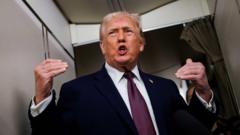
Former US President Donald Trump announced a 25% tariff on countries doing business with Iran, signaling a tougher stance on global trade connected to Iranian commerce. The move may impact international trade partners, businesses, and markets that maintain economic ties with Iran.
This policy is widely viewed as a strategic extension of US economic sanctions to increase pressure on Iran while discouraging third-party countries from continuing trade activities.
Disclaimer: This post is shared for informational purposes only and is summarized from publicly available news sources.
Source: BBC News
What the 25% tariff means
A tariff is a government-imposed tax on imported goods. If implemented, this 25% tariff could raise import costs for products linked to countries that maintain trade relationships with Iran.
This type of trade action is similar to what experts call secondary sanctions, where a government pressures not only the target country (Iran) but also third parties that do business with it.
Possible impact on global trade
This announcement could increase global trade tensions, especially among:
- Countries with existing trade partnerships involving Iran
- Businesses operating in multiple markets
- Importers and exporters affected by tariff increases
In many cases, trade and tariff policy decisions like this can affect:
- global supply chains
- prices of imported goods
- international agreements and negotiations
- overall market confidence
Market and economic implications
While details and enforcement may still evolve, markets often respond quickly to developments involving:
- US trade policy
- Iran sanctions
- geopolitical uncertainty
- energy sector concerns (including potential effects on oil prices)
If tariffs expand or trigger retaliation, the long-term impact could be broader than expected.
Key takeaway
The proposed 25% tariff on countries doing business with Iran reflects a stronger approach toward enforcing economic pressure. This may influence international trade decisions and increase uncertainty across global markets.
FAQ
Is this the same as sanctions?
Tariffs are not exactly import taxes, while sanctions restrict trade or business activity. But tariffs can act like sanctions when used as pressure tools.
Who could be affected?
Countries and companies trading with Iran, including those involved in energy, manufacturing, and large-scale exports.
Will this impact global markets?
It can, especially if it affects oil trade, large exporters, or results in trade retaliation.
Leave a Reply